AVR HV Rescue Shield kits back in stock, new lower pricing!

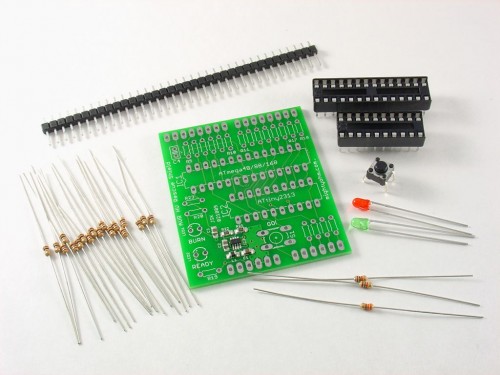
AVR HV Rescue Shield Kit Components

Good news!  The AVR HV Rescue Shield kits are back in stock, with new, lower pricing!

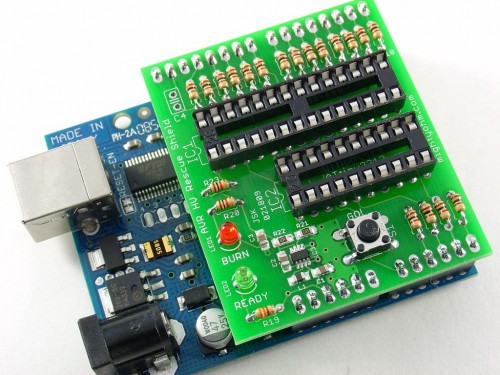
The full kit, which has been reduced to $19, includes a professionally made PCB with preassembled DC-DC converter and all the parts you need to build the AVR HV Rescue Shield.

The PCB-only option is still available, which includes one unassembled PCB (DC-DC converter is not included).  Pricing on the PCBs has been reduced to $6.

Head over to the AVR HV Rescue Shield page to place an order!

(Note that prices do not include shipping or taxes, if applicable.)

DIY Digital Thermostat-controlled Space Heater

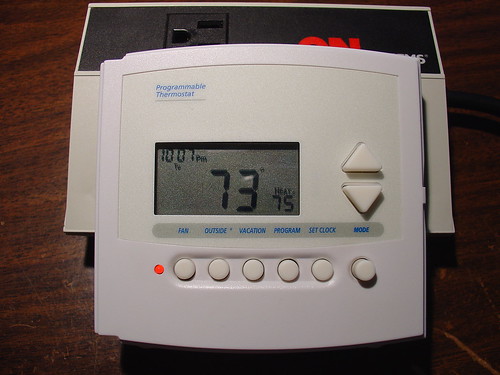
Finished Controller

The rain and dropping temperatures in San Francisco this weekend reminded me of a project I made in the winter of 2006.  This was long before mightyohm.com existed, so I originally documented the project at instructables.  I’m not going to repeat everything here, but I wanted to share some pictures and provide a link to the instructable in case anyone else wants to try this at home.

The project involves using a digital programmable thermostat to control an inexpensive space heater.  The original motivation for this was that I wanted to lower the temperature of the heater at night, reducing my energy bill, while still being able to wake up to a toasty room in the morning by setting the heater to turn on full blast 30 minutes before I awoke.

Here’s a schematic of the simple circuit I made to interface the thermostat to the space heater.  The resistor/diode/capacitor circuit allows the thermostat, which is designed to control an AC load, to switch power to a 24VDC coil relay.  A 36VAC
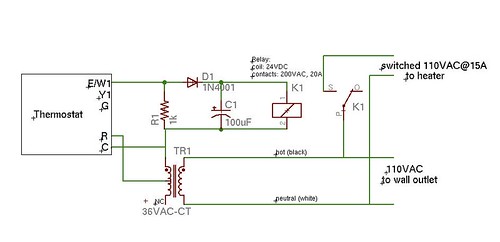
Space Heater Controller Schematic

I installed the necessary components inside the case of an old power and telephone line filter, used to protect a fax machine or office copy machine from power surges.  The case came with a handy 110V outlet mounted on the front panel which I reused for this project.  The digital thermostat mounts to the top cover of the case.

I used a barrier strip as a way to simplify the wiring and mount the few loose components:
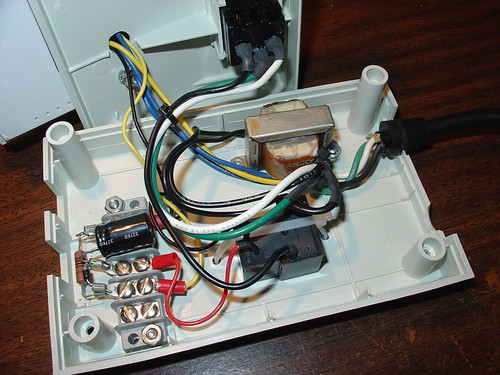
Space Heater Controller - Inside

I had to adjust the value of C1 to get reasonably clean DC to the relay while not having an annoying turn-off lag when the control line from the thermostat goes low.  100uF works well for the relay I used.

Here’s the finished product installed in my former bedroom:
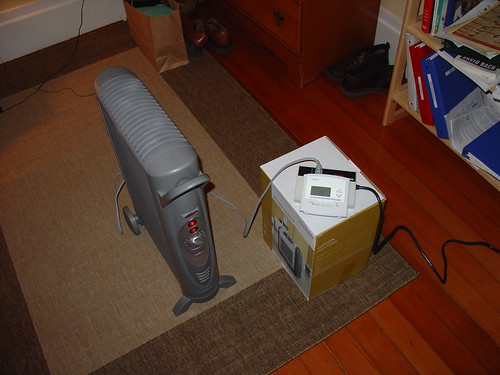
Controller and Space Heater

I haven’t used it since I moved into a house with working central heating, but it sure came in handy during the cold winter I spent in a 100 year old farmhouse in Petaluma.  This solved the problem of the sub-50 degree mornings I was having nicely!

instructables.com: Space heater controlled by digital thermostat

Comments?  Questions?  Leave a comment below!

Ham Radio – Studying for the General Class Exam

When my renewal notice came in the mail, I was surprised to learn that I’ve had my ham radio license for just over ten years.

I received my Technician class license in college shortly after my classmate Tony introduced me to the world of amateur radio.  I started out playing with TNC‘s and packet radio.   Later, with Tony’s help, I built various microwave radios so I could participate in the very active San Diego Microwave Group.  Some of my projects included a 10GHz transverter and a simple 24GHz wideband radio that used a surplus gunnplexer as an RF source, the same kind as found in police radar guns and many automatic door openers.  (Please excuse my ancient webpages, they were cool ten years ago, ok?)

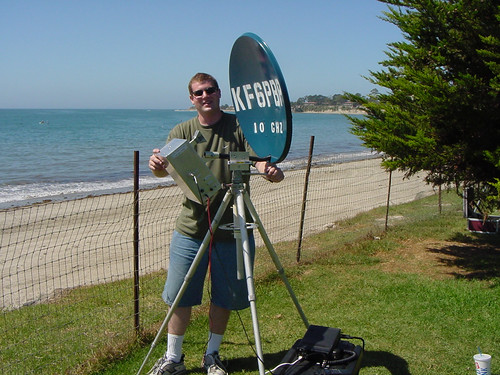
Here I am with my 10GHz transverter in the summer of 2000 during the ARRL 10GHz and Up Contest.

10GHz Transverter
Sun, sand, and microwaves in Santa Barbara.

I also used to be somewhat active on 2m/440 and still have the Kenwood TH-79A radio my Dad bought me after I got my license.  I still use it today, but not for voice communications.  It has a new life now as part of my APRS Tracker project.

After seeing how many hams there were at NOTACON earlier this year, I finally decided it was time to upgrade my license to General class.  This will give me more operating privileges on the HF bands, the traditional low frequency / long distance communication bands that are most commonly associated with amateur radio.  My goal is to set up an HF station at home and maybe start playing with a Software Defined Radio system such as GNU Radio with custom homebrew hardware.

Before my trip to HAR I picked up a copy of the ARRL General Class License Manual and printed out a list of VE sessions in the Bay Area over the next couple of months.  Now that I’m back, it’s time to start studying!

Looking for feedback on the AVR HV Rescue Shield

AVR HV Rescue Shield

Back in March, I released the AVR HV Rescue Shield, my first open source hardware kit.  The AVR HV Rescue Shield is a high voltage parallel mode fuse programmer for Atmel AVR microcontrollers.

Since then, I’ve sold dozens of kits around the world.

If you bought a kit, I want to hear from you!  Specifically, I’d like feedback on the following items:

  • Was the kit easy to assemble?  Are the assembly instructions clear and easy to follow?
  • Is the Arduino sketch easy to use?  Are the usage instructions helpful?
  • Are you satisfied with the kit?  Does it work as advertised?
  • Have you modified the kit or Arduino sketch in any way, such as adding support for more AVRs or programming modes?
  • Have you taken advantage of the Open Source Hardware model or CC-licensing to re-use this design in a new and interesting way that you’d like to share?

You can leave feedback in the comments below, or if you want to respond privately, use the contact form to contact me directly.

Thanks!