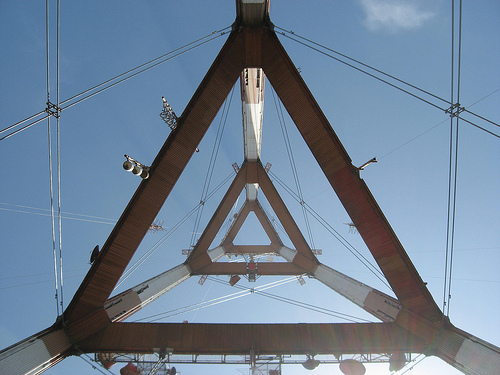
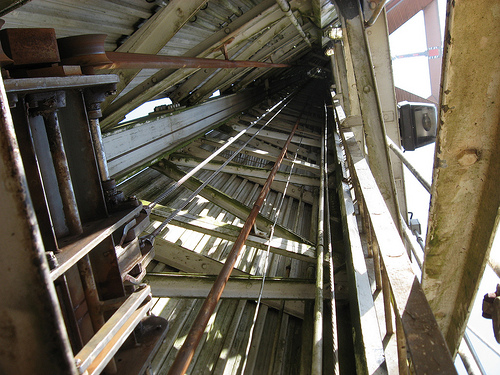
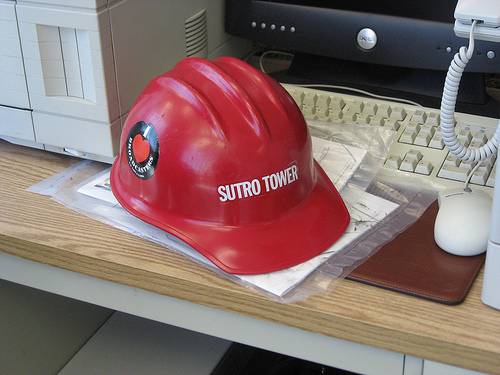
David July, who runs sutrotower.org, posted a fascinating set of pictures documenting his tour of San Francisco’s Sutro Tower.

David July, who runs sutrotower.org, posted a fascinating set of pictures documenting his tour of San Francisco’s Sutro Tower.

The past few weeks have seen a lot of activity on the MightyOhm Wiki!
Since it was mentioned on the Make: blog last week, helpful readers have been making significant contributions every day.
One highlight of the wiki is the Surplus Electronics Resources page, which I first posted about in February. It has more than quadrupled in size since then and now includes surplus shops in the United Kingdom and Canada in addition to dozens in the United States. If you haven’t seen this page yet, you should definitely check it out.
If you don’t see your favorite electronics surplus store on the list, please add it! Several of these “junk shops” close every year due to rising rents and competition online. Anything we can do to keep them in business will benefit the maker community. One way to do this is by making sure that folks know that these resources exist, and this is where I hope the wiki will help.
I want to express my sincere gratitude to everyone who has been contributing to the wiki. In particular, thanks for making it one of the best directories of electronics surplus stores on the web!
As installed by the avrdude package on Ubuntu, avrdude needs root priveledges to work properly with the Adafruit USBTinyISP AVR programmer. This gets annoying pretty fast because to program an AVR you need to run avrdude (or make) with sudo every time or log in as root (not recommended). Without sudo, avrdude will return an error:
avrdude: error: usbtiny_transmit: error sending control message: Operation not permitted
avrdude: initialization failed, rc=-1
Double check connections and try again, or use -F to override
this check.
avrdude: error: usbtiny_transmit: error sending control message: Operation not permitted
avrdude done.  Thank you.
LadyAda points out in her avrdude tutorial that there is a way around this behavior by setting up some udev rules for the USBTinyISP. However, I found that the rules given in her tutorial did not work with my stock Ubuntu 9.10 installation. The problem arises because the user Ubuntu creates on install is not part of the “users” group.
Create a file called 10-usbtinyisp.rules in directory /etc/udev/rules.d
SUBSYSTEM=="usb", SYSFS{idVendor}=="1781", SYSFS{idProduct}=="0c9f", GROUP="adm", MODE="0666"
Then execute:
sudo restart udev
That’s it. Unplug and replug in the USB cable to your USBTinyISP programmer. Now avrdude should be able to access the USBTinyISP without root privileges.
If your account is part of another group, just change the GROUP= flag to that group instead. New users in Ubuntu are assigned to a group named after their username by default, so that is another option (ie. GROUP=”yourusername”). Interestingly, new users are not assigned to the “users” group, for reasons that escape me (and no doubt some of our more Linux-savvy readers can enlighten us about).
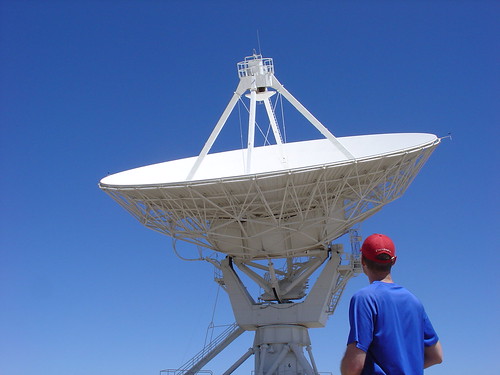
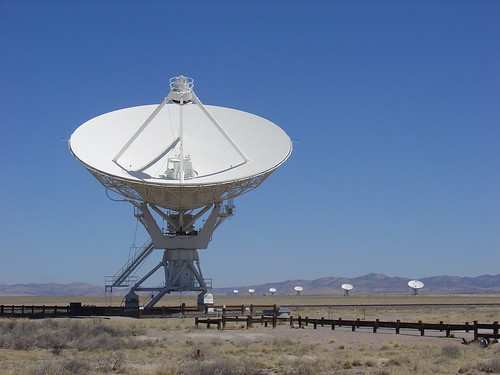
The Very Large Array (VLA) is an NRAO-operated radio telescope facility located approximately 50 miles west of Socorro, New Mexico. The array operates on the principle that data collected from each of the 27 independent dish antennas can be combined in such a way that the array acts like a single, much larger radio telescope.
I had a chance to see the VLA for the first time last year while traveling through New Mexico.
Upon arriving at the VLA, a visitor center welcomed us with some exhibits about research being done at the facility a short video, a self-guided tour, and a gift shop where you can buy space-themed souvenirs and Astronaut Ice Cream.
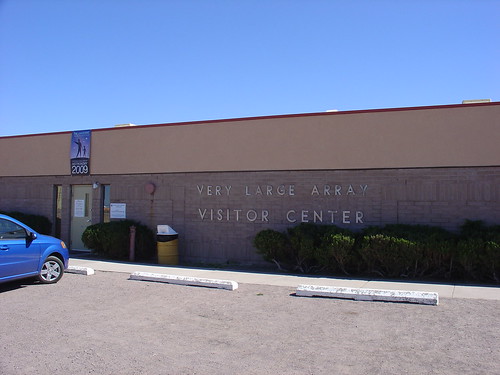
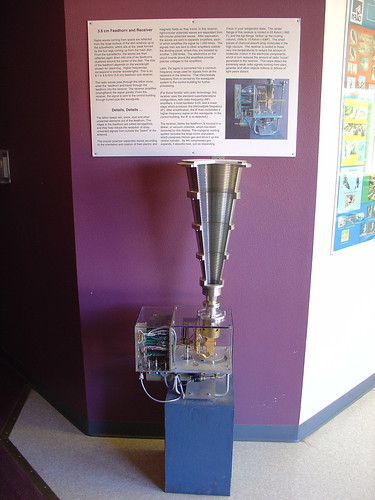
A few of the exhibits were particularly interesting to me given my previous experience with microwave RF circuits. One was a cross-section of a 3.6cm feedhorn and receiver setup as found on the dishes (view the full size poster more details).
The highlight of the tour, of course, is the opportunity to get up close to an operating dish. After a short hike from the visitors center, I found myself in the shadow of one of the VLA’s massive white dish antennas. Every minute or two, the dish moved slightly to stay pointed at the same point in the sky despite Earth’s rotation. Standing under the dish, listening to the roar of the refrigeration units that keep the receivers cool, I couldn’t help but wonder if I should have pursued a career in radio astronomy!
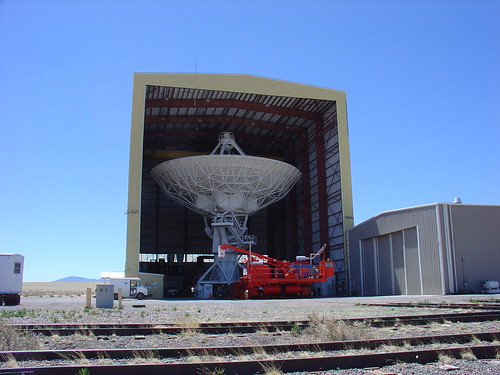
Our last stop on the tour was the service yard. Each dish is rotated out of service for maintenance on a regular basis. This is where the dishes are maintained in the safety of a huge repair hangar.
Was my visit to the VLA worth a 100 mile detour across the New Mexico desert? Absolutely!
Want to see more? There are lots more pictures of the VLA in my Flickr photostream.
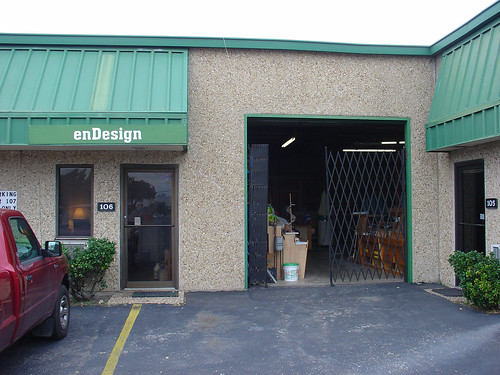
A couple weeks ago, I had the chance to witness the birth of a brand new hackerspace while visiting Austin for a few days.
The aptly named Austin Hackerspace is located a few minutes south of downtown (on Ben White Blvd.) in an unassuming shop building (very easy to miss, look for the enDesign sign).
By California standards, the space is pretty big (insert joke about Texas here):
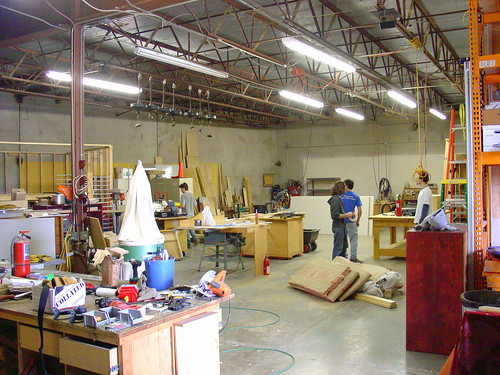
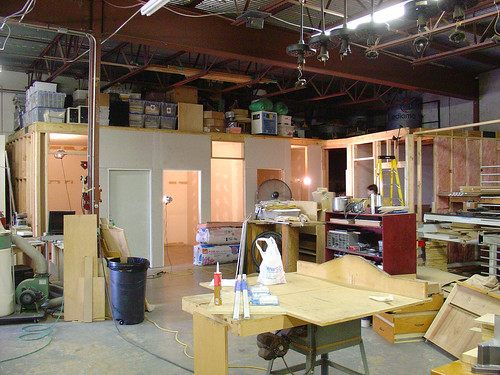
The founders are taking an interesting approach to building the hackerspace. Studios are being constructed around the outside of the space. They are renting 1/4 studio slots to interested hackers that need a place to store their stuff or work on projects in a quiet, air conditioned environment.
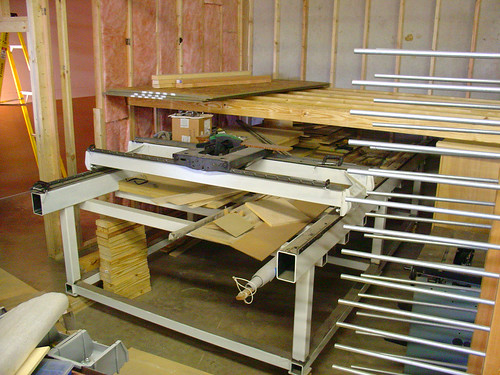
Access to the common areas is free (as long as a key-carrying member is present). There are already some tools available for shared-use, such as the large CNC X-Y stage (a work in progress) shown here:
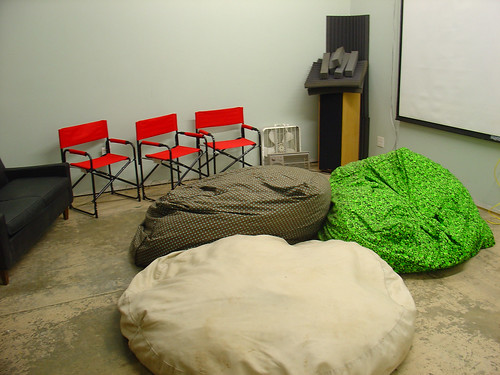
There is also lounge with a video projector for meetings (dorkbot!) and some comfy chairs.
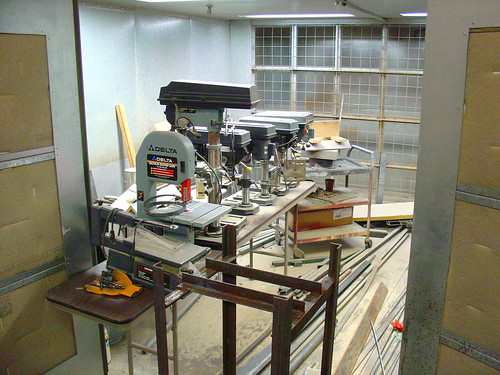
Drill presses and other tools (which I assume will be available for use in the space) are being temporarily stored inside a large paint booth, which will also be available to members.
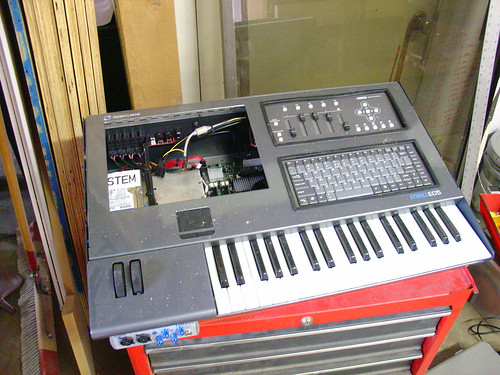
On my way out, I spotted some evidence that there will be some interesting hacking happening here in the near future…
Interested in helping out? They are looking for volunteers. More photos are here, and more info about the space is available at austinhackerspace.org.