Posts Tagged ‘pcb’

Flickr Printed Circuit Boards Photo Pool Hits 100 Members!

Monday, March 9th, 2009

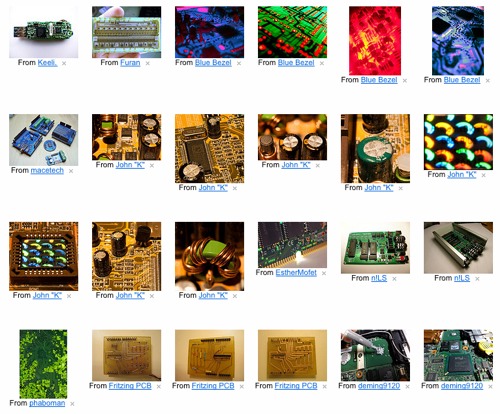
100 wonderful, amazing people have joined the Flickr Printed Circuit Boards Group since I launched it in July of last year!

The pool features over 400 pictures of printed circuit boards, many of them CC licensed.  There’s a little bit of everything, from homebrew board fab to PCB jewelry and even miniatature cityscapes.

If you have some cool PCB images of your own, add them to the pool!

One of my favorites: Car Park or Printed Circuit Board?

Flickr PCB Photo Pool

AVR HV Rescue Shield PCBs are in, kits available soon.

Tuesday, March 3rd, 2009

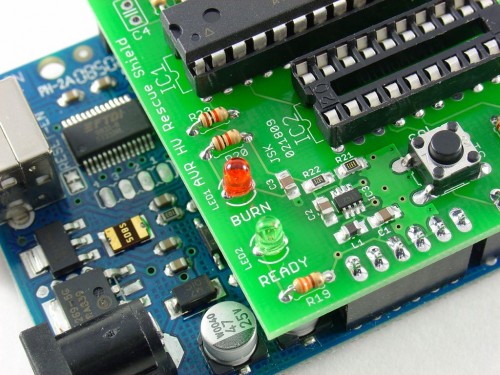
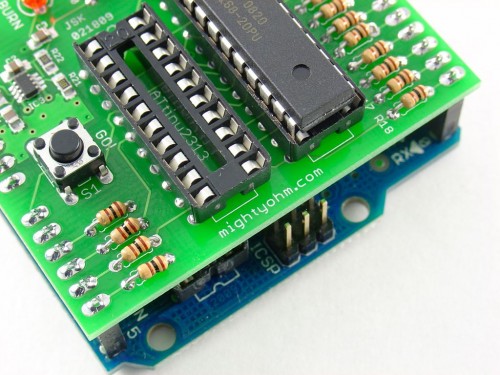
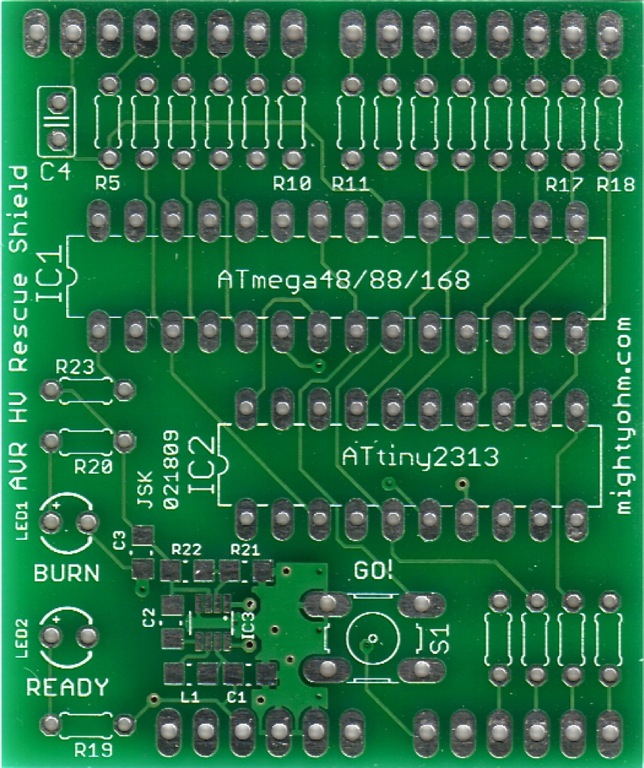
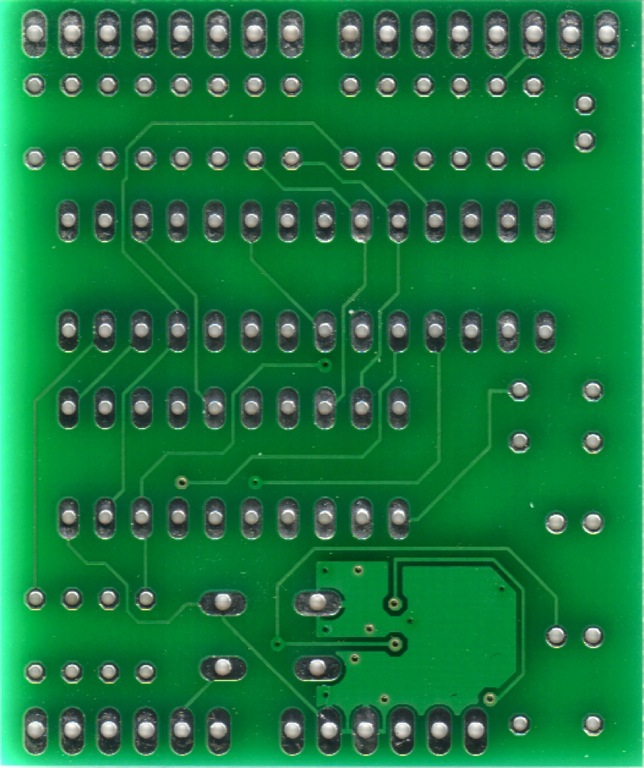
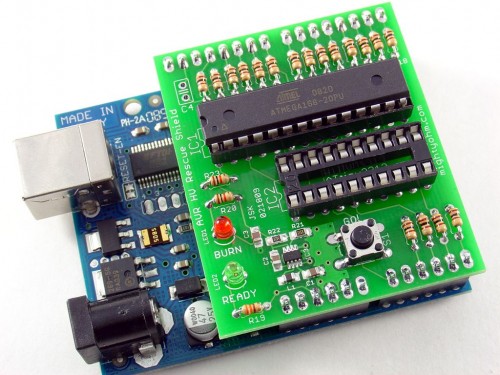
Big news – the AVR HV Rescue Shield PCBs arrived yesterday!  I’m currently testing them and will post information about kits for sale as soon as I verify that everything is working properly.

This is actually the second spin of the PCB but the first to bear the ‘Rescue Shield’ name.  The first spin was a one-off prototype to check a couple things out, mostly related to the 5V to 12V step up converter.  That design allowed me to fix a couple bugs before doing a production run with the improved design, show below.

So far all I can say is that the step up converter works perfectly.  (Yipee!)

More details to come!

AVR HV Rescue Shield PCB - Top

AVR HV Rescue Shield PCB - Bottom

DIY Flexible Printed Circuits

Thursday, February 19th, 2009

Pyralux material

Here’s a really cool Instructable about using a flexible copper-clad material called Pyralux to make flexible printed circuit boards.  You could make some really cool business cards with this stuff.

DIY Flexible Printed Circuits

(via makezine)

Poll: Who is your favorite prototype PCB vendor?

Thursday, January 29th, 2009

As I wait for my AVR High Voltage Programmer Shield PCBs to come back from BatchPCB, I’m starting to wonder what prototype PCB services other people are using for their boards.

Ladyada has a PCB Cost Comparison Calculator that shows the significant differences in price between various low volume PCB vendors, but what’s missing from the chart is the answer to: What vendors are people actually using?

If the cheapest fab house is also the best, obviously the more expensive vendors wouldn’t be around, would they?  Unfortunately, it’s usually not that simple, cheap usually means slow, or low quality, or both.

I know that some visitors to this site make prototype PCBs at home and others send them out to be fabricated.  How do you get your prototype boards made?  Vote below.

Who is your favorite prototype PCB vendor?

View Results

Loading ... Loading ...

New Stereo Zoom Microscope for my Electronics Lab!

Wednesday, January 21st, 2009

Soldering surface mount (SMT) components is tricky, particularly if you can’t see what you are doing due to the small scale of most SMT parts.  Since I started working with SMTs at home I have suffered with a 10x magnifier ring-light.  It works, but it’s tricky to use, mainly because the working distance is so small that getting a soldering iron on a part and keeping that part in focus are almost mutually exclusive.

The right tool for this job is a stereo microscope.  Stereo microscopes use two separate optical paths to provide you with depth perception, very helpful for working with 3-dimensional objects like printed circuit boards.  Even better is a stereo zoom microscope, where the magnification factor can be changed by turning a knob instead of swapping out lenses.

Until now I assumed that a stereo zoom microscope would be way out of my price range, at least several hundred or a thousand dollars for a very basic setup.  However, some searching on eBay showed that good deals can be had, and a used microscope with a boom stand suitable for surface mount work can be found for as little as $200-$300.  New microscopes are available for $400-$500, although there is some debate regarding the quality of low-cost imported microscopes.  Caveat emptor.

For surface mount soldering, 7-30x magnification is reasonable (that’s 10x eyepieces * a 0.7-3x objective), and a 4″ or greater working distance makes using tools under the microscope a lot easier.

I ended up buying an American Optical (AO) model 569 with an illuminator and boom stand, shown below.  Total cost was just over $200 with shipping.

Stereo Zoom Microscope

Combined with the PID controlled hotplate I just put together this is a very powerful setup for doing rework of very tiny components – I could probably work with 0402′s, maybe even 0201′s if I was careful.  Using this setup, 0805′s are easy. (and they look huge!)

The scope is very old, it was made in the late 1970s, but it has survived in extremely good condition.  Upon receiving it, I tightened some setscrews and regreased the slides and it’s as good as new, despite being over 30 years old!

American Optical Corporation

There are a few more photos of the microscope setup on flickr.

The image quality is excellent.  Here are a couple pictures of my SYBA USB-Audio Adapter taken with the microscope and my Sony DSC-V1 digital camera.  I held the camera up to one eyepiece, set it into macro mode, and snapped the shutter – these images are straight off the camera with no retouching.

Microscope images of the SYBA USB-Audio Adapter Microscope images of the SYBA USB-Audio Adapter

Click to enlarge.


www.flickr.com
mightyohm More of mightyohm